


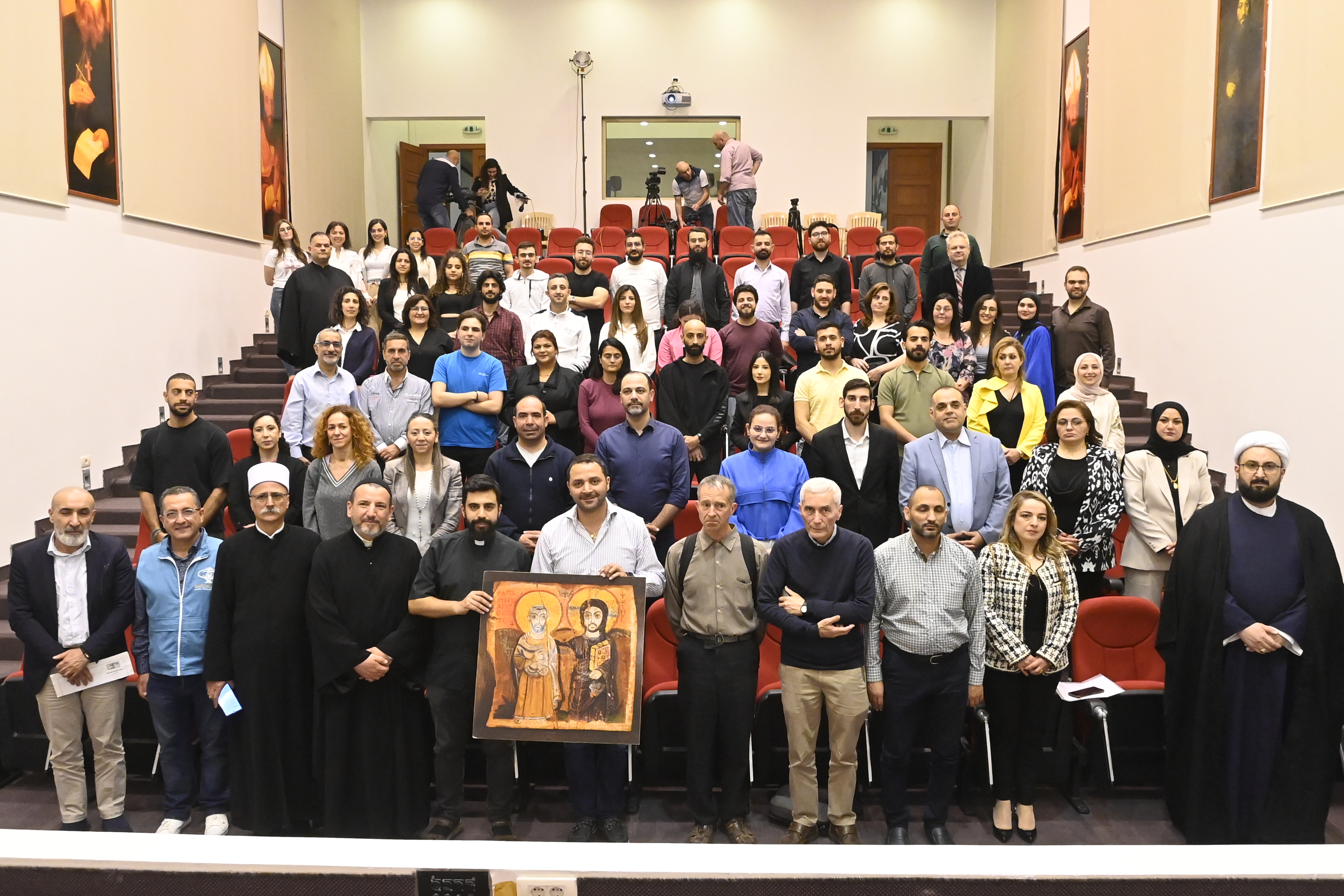
The 2025 Ecumenical Youth Meetings began with a national gathering held on 30 April 2025 at the Theatre of the Monastery of Our Lady of Louaize in Zouk Mosbeh. Organized by the Youth Ministry Office of the Maronite Patriarchate in collaboration with the youth offices of the Churches in Lebanon and with the support of the Taizé Community, the event brought together young people from different Christian Churches and religious communities under the title “Kasra, Fatha, Damma”—three Arabic diacritical marks symbolizing the pain of war, the opening toward dialogue, and the embrace of love and solidarity.
Through personal testimonies, prayers, reflections, and artistic presentations, participants shared inspiring stories of compassion experienced during the recent war in Lebanon. Speakers from the Sunni, Shiite, Druze, Alawite, Bahá’í, and Christian communities emphasized that genuine faith is expressed through acts of mercy, hospitality, and service. Their experiences illustrated how ordinary people crossed religious and social boundaries to shelter displaced families, care for the wounded, and stand beside one another in moments of suffering.
A recurring message throughout the evening was that human dignity transcends religious affiliation. Participants reflected on how the hardships of war revealed the values that unite Lebanese society and demonstrated that authentic dialogue begins with listening, mutual respect, and concrete acts of love. Rather than allowing differences to divide them, many shared how these experiences strengthened friendships and inspired lasting cooperation among people of different faiths.
The gathering was further enriched by the participation of Brother Jean-Jacques and Brother Robert from the Taizé Community in France, who expressed their deep solidarity with Lebanon and shared how the country remains present in the daily prayers of the Taizé community. Young participants who had previously taken part in Taizé encounters also testified to the transformative impact of these experiences, describing how they deepened both their own faith and their appreciation of religious diversity while encouraging them to become builders of peace.
The Ecumenical Youth Meetings also commemorated the 1700th anniversary of the First Council of Nicaea, reflecting on its enduring legacy as a model of synodality, dialogue, and unity. Speakers highlighted the Council’s importance in proclaiming the common Christian faith and emphasized that the pursuit of Christian unity today remains inseparable from prayer, mutual understanding, and collaboration among the Churches. The discussion also addressed contemporary efforts to establish a common date for the celebration of Easter as a visible sign of Christian communion.
The event concluded with a moving ecumenical prayer inspired by the spirituality of Taizé, featuring Scripture readings, periods of silence, and hymns in several liturgical traditions, including Syriac and Armenian. In their closing remarks, the organizers reaffirmed their commitment to strengthening ecumenical cooperation among the Churches of Lebanon and expressed the hope that the friendships, dialogue, and shared witness fostered during these meetings would continue to inspire young people to become ambassadors of reconciliation, peace, and hope in Lebanon and throughout the region.


